Trois profils, trois causes types
Profil 1 — Le centre historique, autour du château
Braine-le-Château doit son nom au château médiéval édifié par les seigneurs de Trazegnies au XIIIe siècle, et son centre conserve un bâti ancien, resserré autour de l’église et du célèbre pilori du XVIe siècle, classé monument historique depuis 1936 et devenu au fil du temps le symbole du village. Les maisons de ce périmètre ont des évacuations installées ou modifiées à plusieurs époques : grès ou fonte d’origine, PVC des rénovations plus récentes. Comme partout où les matériaux se mélangent, les raccords entre eux sont les points faibles les plus probables.
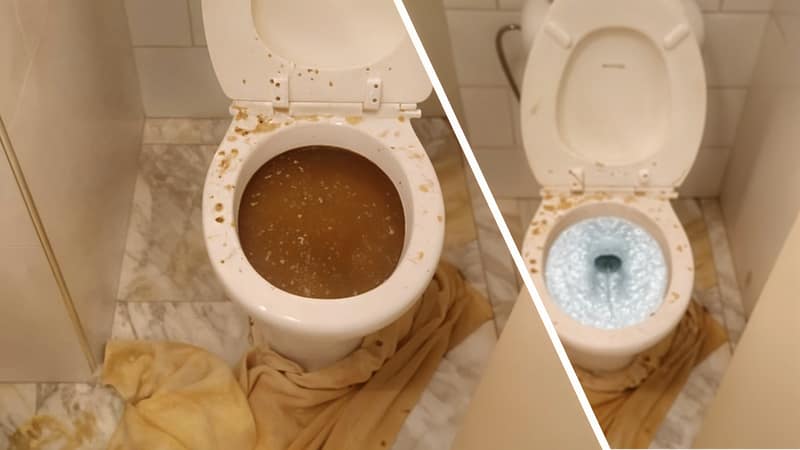
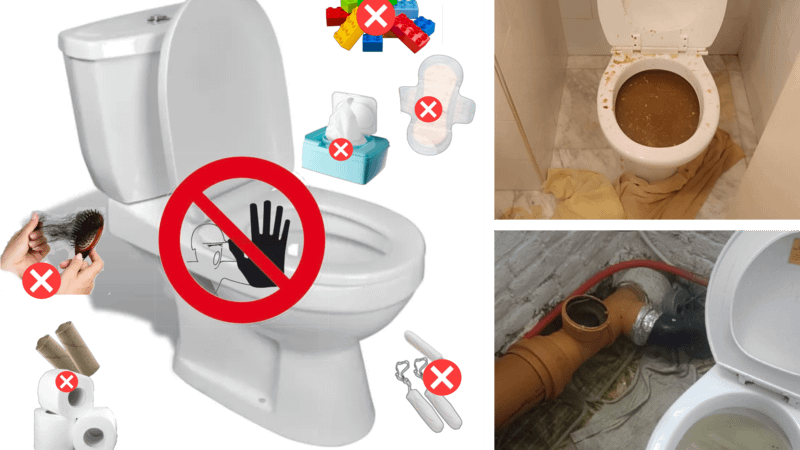
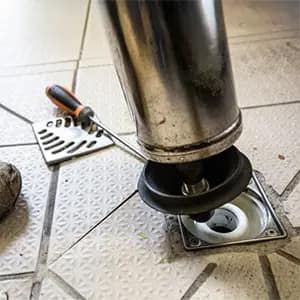
Dans ce profil, la cause la plus fréquente reste banale : accumulation de papier toilette en excès, ou un objet qui n’aurait jamais dû finir dans la cuvette. Mais quand le bouchon revient plusieurs fois par an au même endroit, la vraie cause est souvent une jonction entre deux matériaux différents, pas un excès ponctuel de papier.
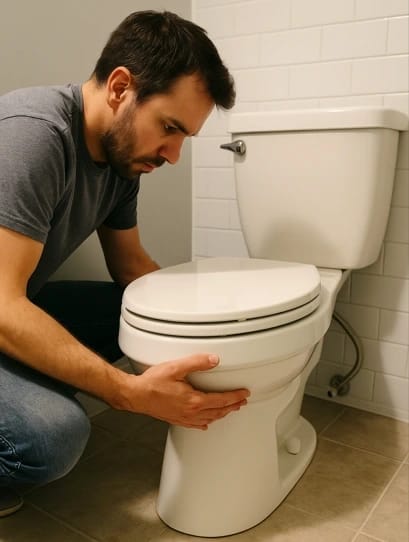
Le type de cuvette joue aussi un rôle, dans une moindre mesure. Les WC suspendus, dont la chasse est intégrée dans le mur, sont assez répandus dans les rénovations récentes du centre : ils gagnent de la place, mais leur système d’évacuation est plus difficile d’accès en cas de bouchon, ce qui rend le diagnostic caméra d’autant plus utile avant d’intervenir à l’aveugle dans une cloison. Les WC posés au sol, plus classiques, restent majoritaires dans les maisons plus anciennes et sont, en général, plus simples à diagnostiquer et à réparer. Dans les deux cas, le mécanisme interne de la chasse mérite aussi un œil de temps en temps : un flotteur mal réglé ou un joint usé peut, à la longue, entretenir une humidité constante qui favorise le développement de dépôts calcaires à l’intérieur même du réservoir.
Profil 2 — Les hameaux ruraux, hors réseau collectif
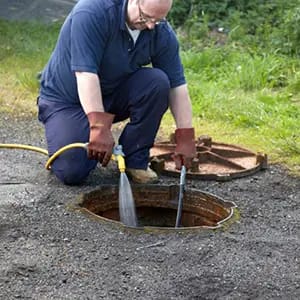
Une bonne partie du territoire de Braine-le-Château reste semi-rurale : Larcier, le Radoux, les Fonds, le Drape, Minon, le Bois de Clabecq, l’Ermitage, la Baraque, le Doyen, la Longue Semaine, Petit Beau Bois, les Cullus, les Cathys, l’Espérance, les Godeaux, les Manettes, Niderand, le Faubourg Saint-Antoine, les Monts, les Meurice et le Cheval Blanc comptent parmi les hameaux et lieux-dits qui composent la commune. Certaines habitations isolées de ces hameaux, notamment en périphérie, ne sont pas raccordées au réseau d’égouttage collectif et fonctionnent avec une fosse septique individuelle.
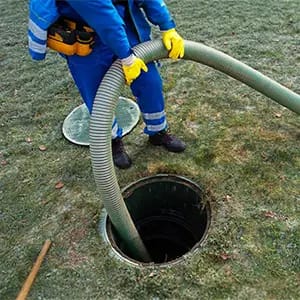
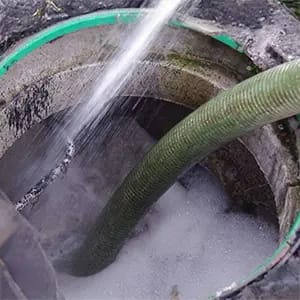
Dans ce profil, un WC qui refoule n’a souvent rien à voir avec un bouchon localisé : c’est tout le système d’évacuation qui est saturé, parce que la fosse n’a pas été vidangée depuis plusieurs années. Signe distinctif : tous les points d’évacuation de la maison (évier, douche, WC) ralentissent à peu près en même temps, pas un seul isolément. Une ventouse ne change rien à ce type de situation ; il faut une vidange fosse septique avant toute chose.
Profil 3 — Wauthier-Braine, entre zoning et lotissements récents
Wauthier-Braine, rattaché administrativement à Braine-le-Château depuis la fusion des communes de 1977, a un profil différent des deux premiers : une partie de la zone d’activité économique de la vallée du Hain s’y trouve, entourée de lotissements plus récents, souvent construits entre 1970 et 2000 avec des évacuations en PVC. Le PVC résiste mieux au tartre que la fonte ou le grès, mais reste vulnérable aux racines d’arbres dans les jardins et aux corps étrangers dans les collecteurs partagés des lotissements.
Ici, les bouchons les plus fréquents touchent moins les WC individuels que les tronçons de collecteur partagés entre plusieurs habitations d’un même lotissement — un profil qui ressemble presque à celui d’un immeuble à appartements, alors qu’il s’agit de maisons individuelles reliées à une même canalisation en amont.
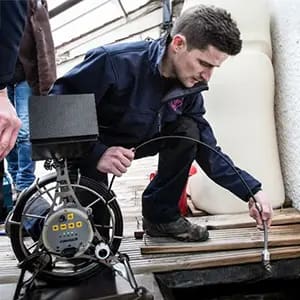
Exemple type dans un lotissement de Wauthier-Braine construit dans les années 1980 : trois voisins ont signalé, à quelques jours d’intervalle, un écoulement anormalement lent dans leurs WC respectifs. Le diagnostic caméra a révélé des racines de peuplier ayant progressivement pénétré un joint du collecteur commun, à mi-chemin entre les trois habitations. Un hydrocurage combiné à un curage régulier programmé a résolu le problème pour les trois foyers en une seule intervention, plutôt que trois déplacements séparés qui n’auraient traité que le symptôme chez chacun.
Le relief de la commune joue aussi un rôle discret dans ces trois profils. Braine-le-Château se trouve sur un sol à dominante limoneuse, assez propice à l’infiltration mais aussi au tassement progressif du terrain autour des canalisations enterrées les plus anciennes. Dans les hameaux excentrés, ce type de sol facilite également l’installation et la longévité des fosses septiques individuelles, à condition qu’elles soient entretenues — un sol trop argileux ou trop humide pose souvent plus de problèmes de drainage que le limon typique de la région.