
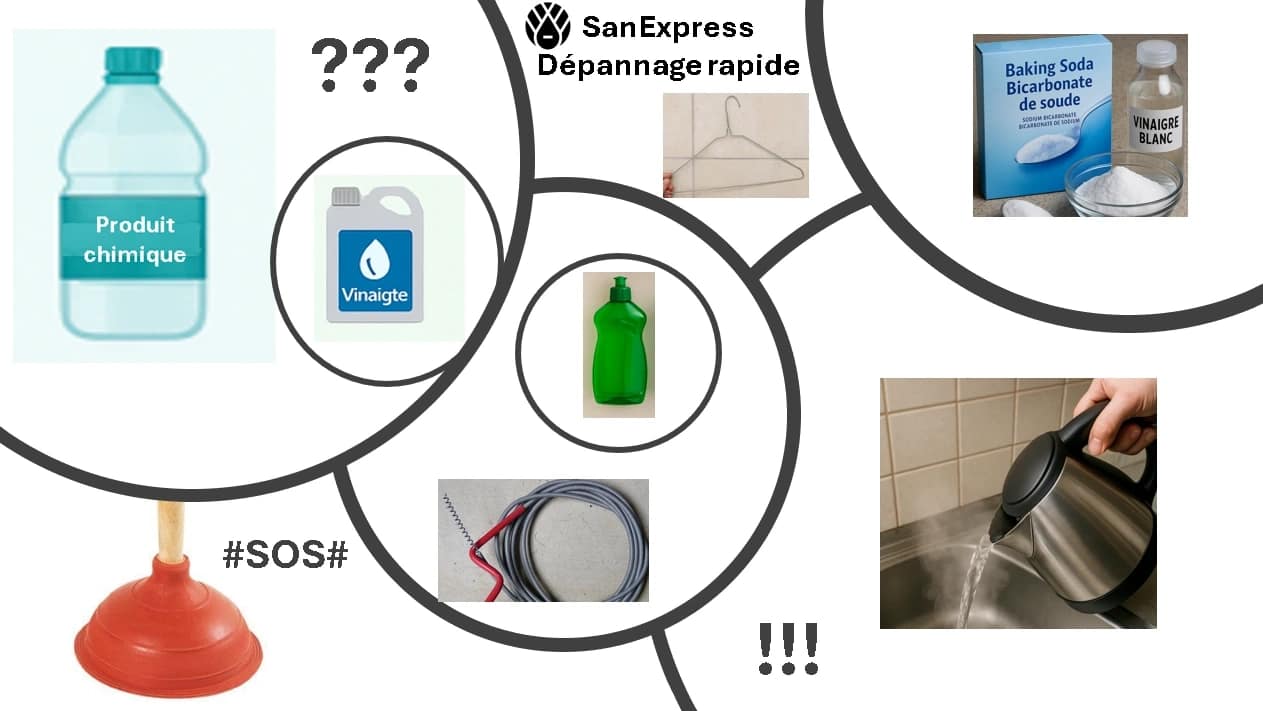
A sink that won’t drain, a noisy washbasin, a shower that backs up… These are all signs that your drain is clogged. And it can’t wait. When water stagnates, daily life quickly becomes uncomfortable. Fortunately, there are now many products and tools available to unclog drains quickly, without necessarily calling a plumber immediately.
Are your drains blocked? Here are the tools and products for unblocking them.
Whether you’re a fan of homemade drain cleaning solutions (like white vinegar or baking soda ), or you’re looking for an effective drain cleaning tool to take things further, this article will guide you step by step. SanExpress, a specialist in fast drain cleaning in Wallonia, presents here the most useful drain cleaning products and tools, tested and approved.
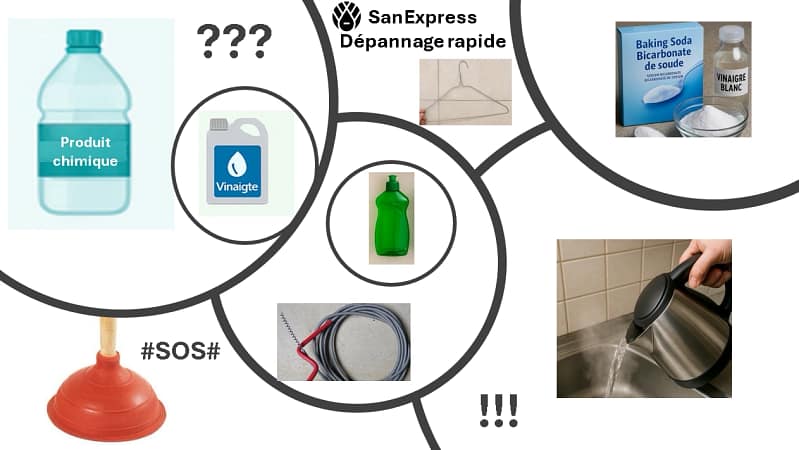
Here you will find home tips, advice to avoid common mistakes, and the professional methods we use daily with our clients.
Signs that indicate a blocked drain
Before even thinking about tools, you need to know how to recognize the symptoms of a blocked drain. Acting early means avoiding a surprise flood… or an emergency call.
Visible signs that should not be ignored
Water drains slowly: whether in the sink, shower or washbasin, this is the first sign that something is blocking the flow.
Air bubbles or a strange gurgling sound: these noises often indicate that air is trapped by a blockage that is forming.
Water backing up: if you flush the toilet and the sink gurgles, the problem is widespread.
An unpleasant odor: a sign that an organic blockage is decomposing in your pipes.
Why we must act without delay
A recent clog can often be cleared with a simple tool or a homemade drain cleaner. But the longer you wait, the harder the clog becomes and the deeper it travels into the pipes. At that point, only professional drain cleaning tools or a service like SanExpress’s can resolve the problem without causing damage.
Essential manual drain cleaning tools for unclogging your pipes
Before buying a chemical drain cleaner or calling a professional, consider manual drain cleaning tools . Often underestimated, they are remarkably effective at clearing a drain blockage located near the drain plug.
The suction cup: the basic reflex… but not so basic
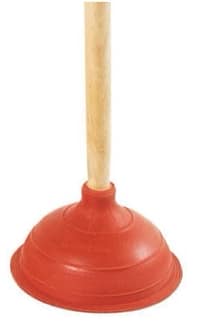 It’s found in every home, often tucked away under the sink or forgotten in a cupboard. Yet, the plunger remains a remarkably effective tool, provided it’s used correctly. It’s not just an accessory you wave around randomly. For it to work, you need to create a real suction effect.
Start by positioning it correctly over the drain opening, ensuring it completely covers it. Then, apply several firm, rhythmic presses. This movement will create a blast of air that dislodges the clog and frees the drain. As a result, the water starts flowing again, sometimes all at once.
This is the ideal solution, highly recommended for DIY drain cleaning products and tools, for shallow clogs in kitchen sinks or bathroom sinks. And to increase its effectiveness? Plug the other drain outlets (like the overflow) to concentrate all the pressure on the clog. A small step that often makes all the difference.
The plumbing auger: precise, flexible, formidable
When a plunger isn’t enough, you bring out the secret weapon: the drain snake. This long, flexible cable, ending in a small spiral head, snakes its way through your pipes with surprising agility. It goes where your hand can’t reach, scraping, loosening, and pulling out even the most stubborn clogs.
It’s the ideal tool when hair gets tangled in the shower, or when soap has formed a solid blockage. And if the clog is further down, at the bottom of a bend or inside a wall pipe? Don’t panic. There are electric versions, which our technicians at SanExpress use every day. These motorized drain snakes go further, faster, and most importantly, without damaging your pipes.
The metal coat hanger: when an emergency catches you by surprise
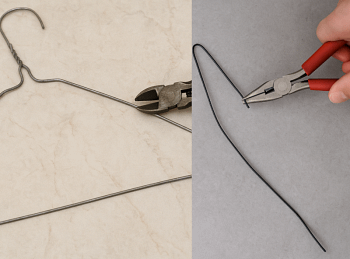 No plunger? No drain snake? Caught off guard and the water rising? In that case, among the available drain cleaning products and tools, a simple metal coat hanger can become your best ally… provided you modify it.
Take a wire coat hanger (not plastic-coated) and gently straighten it into a long rod. At the end, shape a small hook. You’ve just made a homemade drain snake. Now all you have to do is carefully insert it into the drain, twisting it slowly, to catch hair, soap scum, or other visible debris.
It’s not the most elegant method, but it works surprisingly well when the clog is located just below the drain plug. However, if the problem is deeper, there’s no point in persisting. A wire coat hanger will never replace a proper professional tool. But it remains a useful DIY solution for unclogging drains when you have nothing else on hand.
Natural products to favor for safely unclogging drains
Not everyone enjoys handling harsh chemical drain cleaners – and that’s perfectly understandable. Strong odors, toxic fumes, risks to children or fragile pipes: it’s enough to make you think twice. Fortunately, nature has more than one trick up its sleeve to help you unclog your pipes gently.
At SanExpress, we always recommend starting with a home drain cleaning solution, especially when the problem hasn’t gotten too bad yet.
The winning duo: baking soda + white vinegar
This mixture is a classic… and for good reason. It’s simple, economical, and often very effective against small organic blockages (hair, soap, grease).
Here is our method:
Pour 4 to 5 tablespoons of baking soda down the drain.
Immediately add a glass of white vinegar.
Wait. The effervescent reaction is normal: it is what breaks down the deposits and neutralizes the odors.
After 30 minutes, rinse with two liters of boiling water.
This natural unclogging process cleans the pipe walls and often restores the flow… without any danger.
Coarse salt, lemon, and hot water: for regular maintenance
If you’re out of vinegar, there’s a gentler alternative that many people don’t know about: coarse salt. Sprinkle the equivalent of 3 to 4 tablespoons down the drain, then add a liter of very hot water. The salt acts as a natural abrasive that loosens deposits while being safe for your plumbing.
Want a degreasing and deodorizing effect? Squeeze a lemon into the mixture. The result: clean drains, without chemicals, and a fresh scent in the kitchen or bathroom.
🧠 Good to know: These natural drain cleaning products are not a substitute for professional intervention in case of a serious blockage. However, when used regularly, they prolong the life of your pipes and prevent many emergencies.
Chemical drain cleaners: caution advised
They’re easy to find, often prominently displayed on supermarket shelves, and promise almost immediate results. But chemical drain cleaners aren’t always the best option. Before opening the bottle, it’s best to understand what you’re about to pour down your drains… and into the environment.
Powerful drain cleaners… sometimes too powerful
Yes, these drain cleaning products can be effective. Most contain caustic soda or very strong acids, capable of dissolving hair, grease, and organic residue in minutes. On paper, it sounds appealing.
But in reality, these drain cleaners also damage your pipes, especially if they’re made of PVC or are a bit old. They can eat away at the seals, crack the pipes, or weaken the traps over time. Not to mention the toxic fumes: if the room is poorly ventilated, inhalation is a real risk.
When should they be avoided?
Plastic pipes or aging installation
The presence of a septic tank: chemicals kill beneficial bacteria.
Repeated use: you will end up damaging the pipes more than you unclog them.
Presence of children or animals nearby
In all these cases, it is better to opt for a homemade drain cleaning solution, or to call in a professional.
How to choose the right tool depending on the type of plug?
There’s no single type of clog. Sometimes it’s just a bit of soap scum blocking the drain. Other times, it’s a clump of hair compacted further down the pipe. And sometimes the problem is much deeper, hidden behind several meters of piping. Each situation requires a different solution—not necessarily more complicated, but tailored to the situation.
The light stopper, right there, under the plug
This is often the most common problem. The water drains slowly, gurgles slightly, and you smell an odor rising. This type of clog, formed from soap residue or small debris, is usually located near the opening.
In this case, there’s no need to resort to drastic measures. A plunger, when properly positioned, can be enough to unclog a drain. If you’re comfortable with that, you can also try a wire coat hanger bent into a hook. And finally, slowly pouring two liters of boiling water down the drain can do the trick. Simple, but often remarkably effective.
The denser, greasy or compacted plug
At this point, the water barely drains. The smell is stronger, and the backflow is more significant. We’re talking about more stubborn blockages, often composed of solidified grease, matted hair, or food scraps stuck together. This type of blockage cannot be cleared with a plunger.
The best solution here is a drain auger. A manual one if you have one at home, a motorized one if the clog is further down or firmly lodged. In addition, a mixture of baking soda and vinegar can help soften the blockage. And if you prefer a hands-off method, there are enzymatic products available, which are slower but gentler on the pipes.
The deep blockage, hidden further inside the pipes
When the sink, shower, and sometimes even the toilet all get clogged at the same time, it’s no longer a simple localized blockage. The problem is often located in the main drainpipe, sometimes several meters away. And in these kinds of cases, DIY solutions aren’t enough.
This is where the professional tools come in. An inspection camera allows us to pinpoint the exact location of the blockage without dismantling anything. Then, depending on the nature of the blockage, we move on to high-pressure cleaning: a powerful jet of water that cleans the entire line without damaging the pipes. This is what SanExpress offers in the most serious cases, using precise equipment and without causing any damage.
Mistakes to avoid when unclogging a drain
When you have a clogged drain, you want it to flow—fast. And in the rush, that’s where mistakes begin. At SanExpress, we often get called out after someone has “tried to unclog it themselves with drain cleaning products and tools available at home”… and unfortunately made the situation worse. That’s what we see far too often.
The wrong tool, used incorrectly.
We understand: you don’t have a drain snake handy, so you grab a wire coat hanger, a rod, or even an old metal ruler. And you push. Hard. The clog doesn’t budge… but your tool gets stuck or scratches the inside of the pipe. The result: you still have the clog, and on top of that, a damaged drain.
In these kinds of situations, even a simple intervention becomes delicate. Hence the importance of always using the right tool and never forcing anything blindly.
Dangerous mixtures
A stubborn clog, a product that doesn’t work? Then we try something else… without waiting. That’s when we see the vinegar and caustic soda mixture appear, or worse, two different chemical drain cleaners. This cocktail can cause violent reactions, sometimes toxic, sometimes corrosive. We’ve even seen drains melt due to overzealousness.
If you’ve already used a chemical product, never add another one immediately afterward. And if you’re unsure? Rinse thoroughly and wait at least 24 hours.
Forgetting that the traffic jam will return if we don’t change anything
The clog’s gone? Great. But if grease goes back down the sink, if hair accumulates in the shower, if no maintenance is done afterward… then it’s only a matter of time. The clog will return. And often harder to clear than the first time.
That’s why we always emphasize, after every service call: adopt a simple preventative measure each week. Nothing complicated: a filter, a little hot water, a monthly cleaning with vinegar… and your pipes will stay clear.
When drain cleaning products and tools are no longer sufficient
Recognizing when it’s time to hand over the reins
We’ve all tried it. The plunger, vinegar, the wire coat hanger. We test several products, sometimes even chemical drain cleaners… and yet, the drain remains blocked. It’s often at this stage that we get called.
At SanExpress, we don’t intervene to do what you’ve already tried. We intervene when conventional drain cleaning products and tools reach their limits, and the problem goes beyond what’s visible to the naked eye. A recurring clog, a drain that slows down for no apparent reason, or multiple blockages at the same time: these are no longer signs to ignore.
In these cases, it’s not just a clump of hair or soap. It could be an accumulation at the bottom of the system, a slope issue, or a hardened deposit inaccessible without specialized equipment.
Our professional solutions to go further
 That’s where our technicians take over, with tools you don’t have in your cupboard. We’re talking about precision, performance, and above all, efficiency without damage.
- The motorized drain auger, for dislodging compact blockages deep inside, without dismantling your installation.
- The inspection camera, to accurately locate the source of the problem, even in the most convoluted conduits.
- And of course, high-pressure cleaning, which cleans the entire line, eliminates grease and limescale, and gives your pipes a real boost.
These tools are not meant to replace your efforts. They are there to take over at the right time, when the blockage in your pipes is beyond simple home remedies.
A good tool is good. The right tool at the right time is better.
Unclogging a drain isn’t always complicated. But it’s never something to be done haphazardly. What makes the difference isn’t the energy you put into it, nor the number of products you pour in. It’s the thoughtful choice of the method best suited to what’s happening in your pipes.
Do you have a small clog under the sink? A little hot water and a plunger might do the trick. Do you feel like grease has been building up in the kitchen for weeks? That’s when a drain snake comes in handy. And if several drains are slowing down at the same time, there’s no point in trying all the tricks: you’re probably already dealing with a situation that requires a professional diagnosis.
What SanExpress offers you isn’t just a service call. It’s an analysis of the problem, expertise accumulated through repeated interventions, and drain cleaning products and tools you probably don’t have readily available. We don’t replace your efforts—we complement them, when necessary.
Maintaining your pipes is second nature. Knowing when to ask for help is smart. And we’re here to take care of the rest.